Showing posts with label Faith. Show all posts

Friday, September 28, 2007

The Emotional Side of a Chronic Illness – Part 2

After Diagnosis

I have already outlined many of the emotions that I experienced during the initial diagnosis process. Emotions such as anger, disappointment, frustration, depression, loss, mourning, and guilt, were emotions that came and went, often triggered by an unexpected event or change in my condition. Anger, disappointment, loss, and mourning are emotions that I have been able to overcome. They did not follow me into my post-diagnosis life. Unfortunately, frustration, depression, and guilt decided to follow me into the world of Parkinsonism. Additionally, feelings of being alone and fear had joined the party.

Although frustration, depression and guilt are still with me, they do not intrude in my life as often. Depression is directly tied in with medication and low dopamine levels. Frustration tends to appear more often than guilt. It is my opinion that I will continue to experience frustration primarily due to the continuous changes typical of my condition, which can happen at any time during the day without warning. Of the three emotions and associated feelings, I believe that guilt will soon be a part of the past.

When I first heard Parkinsonism was my diagnosis with the probability that I may have one of the PD-Plus conditions, fear and the feeling that I was alone with my condition, entered into my life.

I immediately set out doing research on all of the PD-Plus conditions, and I was not pleased with the information I was able to find. Parkinson’s Disease can be a devastating condition in its own right, but the PD-Plus conditions were far worse with respect to prognosis. This information was all it took to kick-start the fear, which took off running.

There were several aspects of fear that dominated my thoughts. If I am dealing with a PD-Plus condition, it may only be a matter of time that the Sinemet will no longer offer any benefit for my symptoms. This scenario means that I would always walk slowly with significant difficulty, and my speech would be so affected that verbal communication would always take significant effort. My major symptoms would never be improved, and I would have them with me every minute of the day. Honestly, my fear is whether I have the strength within me to deal with this possibility. I also know that PD-Plus conditions progress more rapidly and reduce life expectancy, and I am definitely not ready emotionally for either. Do not misunderstand, I do not fear death. However, I have so much more I want to accomplish before I am ready to leave this earth. Unfortunately, these fears cannot be put to rest for a while, because I am now in a waiting game to see how quickly my symptoms progress or if the medications decline in benefit.

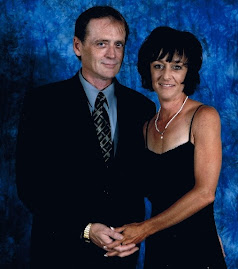
I now understand how a person can feel alone, even if surrounded by a dozen people who love him / her. My husband understands this condition and how it affects my life better than anyone else does. Yet, his understanding is limited, because he does not have this condition. Without having the condition, he can only observe and imagine what it feels like to constantly fight your body, depend on medication to move and speak, and to experience all of the emotional aspects involved. Therefore, although my husband understands more than anyone else who is unaffected by Parkinsonism, I began to feel very alone with my condition. I had no one to talk to about the various struggles, feelings, symptoms, etc., who could understand completely what I face with this condition. Initially, I never thought that there might be someone else out there who was facing a potential PD-Plus diagnosis.

On July 20, 2007, I was again searching the internet for information regarding PD-Plus conditions. On this day, I came across a blog called PD Plus Me. The author of this blog was writing about his experiences with a medical condition that may in fact be one of the PD-Plus conditions. As I read the blog, I was completely overwhelmed, not only with the author’s complete detailed account of his experiences and struggles with his condition, but also the knowledge that I was not the only one.

As soon as I finished reading the author’s story, I sent him an email. I let him know that I had a recent diagnosis of Parkinsonism that could potentially be a Parkinson-Plus condition. I included a little history about my symptoms, and the reasons why they might be associated with a PD-Plus condition rather than regular Parkinson’s Disease. Additionally, I let him know that his blog was one of the most informative and in depth sites I had come across, with respect to Parkinson’s Disease, as well as the PD-Plus conditions.

Within a short time, the author, Dan Brooks, responded to the email I had sent. From that point on we began exchanging information on our conditions. With each email I sent regarding my experiences with my condition, I looked forward to receiving a response in order to compare symptoms. Although there were some differences, there were also so many similarities, and I was so thankful for the opportunity to communicate with another person who understood completely the struggles and emotions involved when dealing with a potential PD-Plus diagnosis.

Dan’s blog, which is such an open and honest account of his journey through the PD-Plus world, was the final inspiration I needed to begin this blog, which had been something I had wanted to do for a while. His blog not only details his own personal story, but also offers insight into how his faith in God has influenced how he deals with his condition. It is very impressive how his blog has evolved into a great source of information for Parkinson’s Disease and PD-Plus Conditions, and that all of this information is available in one place. Additionally, the words he writes are not only educational, but also inspirational and uplifting.

I now consider Dan a friend, as well as a fellow writer with a longing to help others who are dealing with the physical and emotional aspects of these life-changing conditions. Dan’s focus is on providing in depth information on Parkinson’s Disease and the various PD-Plus conditions, while my focus is on providing assistance for those who are experiencing problems with the medical community while searching for that elusive diagnosis. Both of our blog sites share PD-Plus as a primary focus. Therefore, he has added a link to my site on his blog, and I have added a link to his site on my blog. We agree that by doing this, we may have an opportunity to reach more people who are searching for answers and feel alone with their illness. You will find the link to Dan’s Blog under “Resources for PD, PD-Plus & Other Movement Disorders.” The link is titled, “PD Plus Me, Patient’s Personal Story.”

In the short period since PD-Plus entered my life, a new set of emotions and feelings have emerged, and have become powerful forces in fighting the negative emotions. Contentment, enthusiasm, hope, and peace are working hard to replace the negative emotions that this illness promotes. I am now content with my new life as it is today and no longer mourn the life I once had. This blog has created a renewed excitement and enthusiasm that what I share may help someone else who feels alone in their struggles. Hope has been renewed in me through the love and support of my husband and the unending encouragement he gives to me daily. Peace has been provided by my faith in the Lord and the several people who He has recently put in my path who are uplifting as well as encouraging. When I look around me, I now can see how truly blessed I am, in spite of my illness.

Thursday, September 27, 2007

The Emotional Side of a Chronic Illness – Part 1

Pre-Diagnosis

I thought it was time to write about something on a more personal level. The majority of my prior posts have focused on issues patients face when dealing with the medical community and methods that can alleviate some of those issues. Although my previous posts represent my purpose for creating this blog, I think it is important to share the issues I have personally faced with respect to the Parkinsonism diagnosis. Therefore, I decided to begin by writing about how Parkinsonism affects me emotionally now, as well as how it affected me emotionally prior to the diagnosis.

My true diagnosis journey to Parkinsonism began in late 2003. It was at this time that I became fully aware that some of my symptoms were not related to the herniated cervical disc, which had been surgically addressed by a fusion in August of 2003. Because the fusion had corrected the symptoms that were related to the herniated disc, I was better able to recognize that the symptoms that remained were due to a separate cause. Therefore, in order to draw a line in the sand, I now state that my Parkinsonism related symptoms began in late 2003.

For the first couple of years, I did not actively search out a cause for the existing symptoms, nor the additional symptoms that began to emerge. Since many of the symptoms were not consistently present, I was fully aware that seeing a specialist would not produce any results. My previous Primary Care Physician and I made the decision to monitor the symptoms until they were progressed enough that a cause could be determined. I often provided written communication to my physician as symptoms changed or new symptoms emerged. Emotionally, this period caused frustration more than anything else did. I was frustrated because I wanted answers, yet I fully understood why I had to be patient.

The intense search for a diagnosis began in August of 2006. By this time, my symptoms had progressed to the point that without appropriate treatment, my ability to function in all aspects of daily life would have been non-existent. My symptoms were not only consistent and present, but they had progressed to a very severe level. For the first time since my symptoms began, I was frightened. It was at this point that I realized that I was not dealing with a minor disease. I knew that whatever it was, it had the power to rob me of my ability to walk, speak, or do any type of activity that required normal speed of movement. My biggest fear was that whatever I was dealing with might not have a treatment or cure.

I previously posted on how Parkinson’s Disease came into the picture that August day that I tried Sinemet. Between that day until June of 2007, three different Neurologists evaluated me. Two were Movement Disorder Specialists, and the other was a regular Neurologist. Without going through all the details again, I will only briefly describe the roller coaster of emotions during this time.

Anger was a huge emotion that I experienced. I was not angry at the prospect of having PD. I was angry about how I was being treated by the two Movement Disorder Specialists. One made statements contrary to known information about PD, focused on conditions that do not benefit from Sinemet use, and discounted or did not answer questions that my husband and I would bring up. The other specialist blew me off, because I had dared to question the methods of the first specialist. Angry does not even describe the depth of emotion that these experiences caused.

Disappointment was prevalent throughout this process. My third Neurologist was a wonderful, caring physician. Unfortunately, after 6 months, he felt that he did not have the necessary experience needed to diagnose the condition. This contributed partially to my disappointment. The majority of my disappointment stemmed from the knowledge that I was losing a wonderful physician who I knew I was able to work with. Additionally, this event meant that I had to start over again with yet another specialist.

Frustration was a daily emotion, which had multiple contributing factors. During "wearing off" times or when I went off medication for medical evaluations, the return of motor symptoms was very frustrating. The inability to speak normally or to walk with a normal rate of speed and fluency was not only exhausting but also frustrating to the point that I often spent the day in solitude on the couch. Additionally, I felt like I had to be one step ahead and ready for battle when dealing with the specialists, which became a major trigger of frustration. I became more frustrated than ever before with not knowing my diagnosis and I felt that the specialists due to their methods, attitudes, lack of interest, etc., were wasting time. Finally, my biggest frustration was the inability to explain to other people how it feels when the symptoms are present. I never felt that anyone understood completely what I was feeling and trying to express.

During this period, the big “D” entered my life. Yes, whenever my symptoms would return I would be hit with an overwhelming feeling of depression. At first, this really frightened me, because it was a feeling I had never been exposed to before. Initially, I really did not understand that the feeling was in fact, depression. Of course, I began to do some research on the internet, and the information I found explained it all. It appears that when the dopamine levels in the brain are low, such as in between doses or when completely off medications, depression can manifest in the same manner that motor symptoms return. Depression is known as a non-motor symptom of Parkinson’s Disease. This appeared to be what was happening in my case. If my motor symptoms returned to a significant degree, depression would envelope me also. The next dose of Sinemet, which helps with controlling the motor symptoms, would also alleviate the depression. Therefore, I only had to deal with depression during those times when my dopamine levels were low, which I tried to prevent as much as possible.

Loss and mourning go hand in hand. This was the beginning of the sense of loss and mourning for those losses. The feeling of loss involved many factors, primarily the loss of my ability to maintain the fast-paced lifestyle I had always thrived on. I mourned the loss of my ability to work. In many ways, I felt as if I had completely lost the person I once was and had no idea how to deal with the person I was becoming. Additionally, the loss of complete independence and having to rely on other people for certain things was one of the greatest aspects of my former self that I mourned. I had been independent my entire life, and for the first time, I began to realize that my independence and self-reliance were now becoming a part of my past life.

I believe that loss and mourning are such strong emotions for someone dealing with a chronic illness, that often they become barriers to acceptance of the chronic condition, even if the chronic condition has not been firmly diagnosed. It was not until I was able to accept my various losses associated with my condition and get through my mourning of those losses, that I was finally able to envision a positive future, despite my physical health. Once this occurred I began searching out new interests to replace the activities that I was no longer able to do. This enabled me to wake up each morning with new purpose and helped me to realize that there were many things I could still do.

Finally, guilt was a heavy feeling that entered my life. Although my health condition was beyond my control, I began to feel guilty for the burden I felt I was becoming, in the lives of my family, especially my husband. I was no longer able to contribute as much financially as I had been. My condition would sometimes dictate when and for how long we were able to go places. These are just two examples of situations that fueled my guilt. I spoke openly with him about this feeling many times, and each time he would reassure me that I was not the burden I perceived myself to be. He would always say that he fell in love with my heart and my mind, rather than the physical condition of my body. Despite his words, the feelings of guilt, whether rational or not, were and still are difficult to remove from my life.

Through this initial diagnosis process, there were only a handful of people who I shared all of the information I had with respect to my health. My faith in God played a key role whenever I had to deal with these emotional factors of my condition. There were many times when the emotions were so overwhelming, and the only way to get through the negative feeling, was to turn it over to God and let him take control. He always brought me through the rough patches without fail.

The Lord provided a partner here on earth that became my daily strength and the voice of reason whenever my emotions were running in high gear. This partner was my husband. When I needed to talk, he would listen for as long as needed, sometimes for several hours, allowing me to work through my emotions. If I needed to cry, which I rarely ever did prior to this disease, he would hold me for as long as I needed, until I completely cried out whatever emotion I was experiencing. My husband has only spoken words of encouragement with respect to my condition, and has never made me feel like our lives are less full because of it. When I am walking slowly, he holds my hand, and has learned to let me speak for myself even if it takes ten times longer than normal. When my husband has done everything he can to help me through a bad emotional event without success, he is the one who reminds me that it is time to give it to the Lord to deal with. My husband is my partner and best friend on earth. The Lord is my Savior who carries my burdens when we no longer can.